
 The Arab Street Has Made Its Point
 For Security and Democracy in Southeastern Europe: Muhamed Jusić
Since recent demonstrations against the ruling oligarchies in Tunisia and Egypt, along with the now-interna¬tional clash in Libya as well as rising unrest in some other Middle Eastern and North African countries, it is clear to all that this part of the world is at a historic turning point. Developments in Egypt and Libya have illustrated that this process will be neither quick nor easy. In spite of significant challenges, the "Arab street" has sent its message to ruling regimes. The time of people in those countries silently enduring dictatorships is behind us. This message is also meant for those who will come to rule these countries - that they should not count on establishing their own dictatorships or repressing freedoms in the name of any ideals, even reli¬gious ones. Protestors are asking for government that is willing to accept criticism and which will be responsible to the people in whose interest it is working.
It is true that these developments are seen from different perspectives both within these countries and elsewhere in the world, and that the sudden overthrow of regimes is viewed by rightist and leftist ideologists as proof of their own theories of social processes and as an opportunity to instumentalize dissatisfaction of the people in materializing their own interests - thereby ideologizing dissatisfaction for the purpose of achieving political goals. It is interesting that leftists throughout Europe and our region see in these developments a rebellion of the proletariat against "the obnoxious bour¬geoisie" and "American imperialism", while at the same time, radical Islamists have characterized these same events on Internet sites and forums as the ultimate crush of tagut (a tyrant who is usurping Divine law in opposition to the sovereignty of Allah). Still others see these uprisings as further proof of the superiority of the neoliberal economy and democracy, which has exported "our way of life" and the values of a democratic society through open borders and free trade.
T
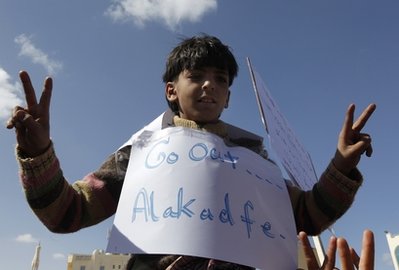 he reality on the ground and the make-up of protesters, as well as why they have gathered in the streets in the first place, hardly supports any of these three theories. Few peasants (Arab felahs) or "regular people" who came to Cairo. Alexandria, or Benghazi to dethrone "the pharaohs of the new age" know anything about the conflicting ideologies or visions of the world that Arab and global elites talk about. These people are simply tired of a lack of freedom and prospects, the presence of corruption - which has entered every pore of life -and protracted unemployment and poverty. They don't know how to solve these problems and, according to early research, they don't even know who might know; but they want more from their governments and they want for their voice to be heard when it comes to deciding their own destiny. This is the biggest step forward these societies have made in modern times, although it is hard to predict how long these processes will last, which ideological form they will take in the end, and whether somebody will try to take these revolutions hostage for their own purposes. Whatever the outcome, the people of Arab countries have finally started playing a role in political processes and are gradually taking their fate into their own hands. With every freedom comes responsibility, and with it, uncertainty.
All that has been taking place in the past few months, and continues as I write this text, proves that the people of that part of the world, and their wishes and expectations, have outgrown the ruling elites, who have proven in all of this to be very dysfunctional. Based on initial reactions in the Arab world, we can see that these leaders look with fear upon developments that are bringing hope to ordinary people, and moreover that they are not ready to draw any sure conclusions from all that has been happening in the Arab street. The ruthless fight of Colonel Muammar Gaddafi to remain in power in Libya at any cost, regardless of the body count, and the threats he has aired - personally and via his son Saif al-lslam1 - that the country will be mired in a civil war if he leaves, prove that he has learned lit¬tle from the last few months. This is also reflected by the measures numerous other countries in the region have taken in order to prevent the same from hap¬pening there. They have hurried to undertake measures to prevent prices of basic foodstuffs from increasing, for example. The exception is Jordan, where the king dismissed the government and started negotiations with the opposition, but the role of the royal family in politics has not been discussed. In Mauritania and Syria, prices of bread, sugar, rice, and light distillate oil have been reduced artificially. The Algerian and Libyan governments undertook similar measures before the overthrow of Ben Ali in Tunisia, but it was not of much use. It was only after demonstrations in Algeria and Libya that the Algerian Council of Ministers decided to recall the state of emergency that had been in force for nineteen years.2 But everyone knows this is only the tip of an iceberg and that what the Muslim world is missing is not a dinar or a dirham more in people's wallets, but freedom, fair distribution of state assets, economic stability, and governments that are accountable to their people. The ruling oligarchies have been talking about this for years, but have done almost nothing. They have used decades of absolute power to get as wealthy as possible and make their military and economic elite rich as well. Today, when they promise to implement reforms as soon as demonstrators leave streets and squares, no wonder people do not believe them.
One of the reasons the governments in these countries have been caught off guard by all these new developments, and why autocratic regimes have started falling like dominoes after so many decades of rule, is the fact that those despots have, simply, been repressing any form of organized opposition for so long that it has emerged in a spontaneous and massive outburst of dissatisfaction that they never expected to be voiced. Of course, it is precisely this spontaneity and the absence of organized opposition that worries numerous analysts, who are afraid that uncoordinated protests could result in chaos and unrest and could, if they last too long, immerse countries in the tumult of civil war and destroy the basic foundations of an already fragile economic development. This is why so many people want revolutions in Arab countries to be successful, and for them to be followed by the establishment of democratic and civil systems, because this would show that these societies have the capacity to keep pace with the rest of the free world and that democracy does not have to be brought to them on American tanks. Establishment of a free civil society would demonstrate that democracy and security are not opposing forces, but that democratization of society in fact brings stability, in opposition to the message of repressive Arab rulers, who told their citizens and their Western allies that their countries would be engulfed by instability were it not for them and their dictatorships. These rulers and their ideologists have reiterated over and over again that even a corrupt government is better than no government at all, and that "a hundred years of tyranny is better one day of anarchy." Success of Arab revolutions would discredit this once and for all.
Establishing a democratic society is toilsome and hard work. It has always been that way, in all societies. Arab nations have just begun this process and they can hardly turn back now. But it is a fact that any government that rules Egypt, Tunisia, or any other Arab country which chooses democracy in the future, will inevitably return to dictatorship to remain in power if their democratic transition fails to face and solve the real problems of citizens. The fight for a better life can start in the Arab street, but it cannot end there. After all, the true bat- tie will be fought when (or if) new political forces are be given a chance and are obliged to disclose the culture of corruption and invent adequate policies to ensure greater economic growth, increased employment opportunities, civil freedoms, and much more that unsatis¬fied people in the streets are lacking.
NEW FACES
 Numerous dilemmas and challenges that these fuming Arab societies face are best exemplified by the case of one of the most important Arab countries, politically, culturally, economically, and militarily - the Arab Re¬public of Egypt, which is proudly and rightly called Umu Dunia or "The Mother ofthe World" by its inhabitants.
There is still speculation as to who could take on the responsibility of leading Egypt through the insecure and demanding process of overall reform. For now, one name is most frequently mentioned as a possible presidential candidate, that of Mohamed ElBaradei, who is not affiliated with any party but is supported by the small and influential middle-class liberal elite. In previous elections, significant power has been exerted by opposition parties in the Kefaya3 movement. Those most active during demonstrations were from al-Gab-ha al-Democrati, but leftist Hizb al Tagammo' el Vatani el Takadommi el Vahdvavi' and Hizbu el-Amel, liberal par¬ties Hizb al-Ghad and Hizbu al-Wafd-al-Gadid, as well as some older parties and some new ones only recently founded, have exhibited strong infrastructure. In total, there are twenty-four different parties in Egypt, most of which fear the results if elections take place in the next few months, because they believe that so many years of dictatorship have ruined the country to the extent that no significant results will be achieved and the most probable winner of elections held "too soon" would be the previously-banned Muslim Brotherhood.4
One of the most looming uncertainties regarding a so¬lution to the present situation in Egypt is indeed the Muslim Brotherhood movement (El-lhvanu el-Musli-mun),5 which is, despite being banned from political action, considered the best organized political actor in the country and one that has been given more legitimacy by the military government. In the first weeks of demon¬strations, they kept a low profile, because, as they said in official statements, they did not want people to get the impression that they wanted to instrumentalize and politicize the dissatisfaction of the masses.
Analysts who have been closely watching the work of the Muslim Brotherhood believe they are waiting for the Arab street to finish its work, after which they can succeed in filling a vacuum, as the best organized political opposition faction and the only one with proven infrastructure. Similar developments can be expected af¬ter regime toppling in other Arab countries where the Muslim Brotherhood or similar supporters of political Islam are active. An alternative analysis of the Muslim Brotherhood's restraint during demonstrations asserts that the Brotherhood is aware that they are the biggest reason the administrations in Washington, DC and in EU member states chose initially not to openly support protestors in the streets of Cairo, and why they did not pressure Hosni Mubarak into stepping down. This, of course, reflected fears of "the West" that Mubarak could be replaced by Islamists from the Muslim Broth¬erhood or a similar organization - elements that are not fond of what they consider "Western imperialists interfering with internal issues of Arab countries" and which are ready to openly oppose the Israeli occupation of Palestine. Of course, there are those who em¬phasize that the Muslim Brotherhood has shown it is a pragmatic political group that can hardly be perceived as radical, and this is supported by its behavior during the weeks of the Egyptian crisis.
There is another noteworthy opinion in this debate, expressed by Tariq Ramadan, a leading Muslim intellectual who lives in Europe and explores the issue of Muslim identity in the West. He is a grandson of Hasan el-Benna, founder of the Muslim Brotherhood movement. Ramadan has said that one of the reasons for the Brotherhood's indecisiveness during protests in Egypt lay in the fact that its members were conflicted within the organization, even at an ideological level.6 He claims there are two streams within the movement; a con¬servative stream which advocates the Islamization of Egyptian society, and a younger, more liberal stream that wants the Brotherhood to follow the model of political action chosen by the Turkish AKP party, i.e. operating on Islamic ethnic and moral principles in the framework of a civil, democratic, and even secular society.
George Friedman, of Stratfor, agrees. He believes it is true that the present Muslim Brotherhood in Egypt is marked by competing values and that a large part of the organization is acting from the shadows due to Mubarak's previous repression, but he, too, does not know whether this group is weaker than the protesters asking for democ¬racy. In the end, he notes that the Brotherhood's caution should not be confused with weakness.7
THE ROLE OFTHEARMY
Immediately upon President Mubarak's resignation, Egypt's Military Council took over, headed by the Su¬preme Constitutional Court, which is to rule the country for the next months until conditions are created for presidential and parliamentary elections.The Mili¬tary Council dissolved both houses of the Parliament and suspended the Constitution, but also issued an or¬der for the military to clear Liberation Square instead of police forces, removing the most stubborn protesters who lived there in an improvised tent settlement. The Military also appointed a judge, Tariq al-Bishri - a distinguished advocate of the independence of the judiciary during Mubarak's regime - as the head of a commission to propose constitutional changes. The Commission was established to alter certain constitu¬tional provisions and determine the rules for a referendum on these alterations, promised by the General to be held within two months.8
Since the first days of revolution in Egypt, it has been obvious that the military plays, and will continue to play, a key part in everything that happens in one of the most important and most influential countries in the Arab and Muslim world. We will witness an identical situation in other Arab countries in which the military plays a key role in sociopolitical developments. In this respect, nothing has really changed in Egypt. This is, in the best case scenario, only the beginning, because the military has always controlled everything in the country. President Mubarak, after all, is himself a product of the military establishment.
We should not forget that the military overthrew the much hated Egyptian monarchy in a 1952 coup, under the leadership of the charismatic Gamal Abdel Nasser and his Free Officers, who started an anti-colonial Arab revolution and, in a way, heralded a new period of modernization in Egypt. Mubarak entered Egyptian politics by advancing in the military hierarchy and climbed all the way to the position of president during the rule of Anwar Sadat. When Sadat, the third Egyptian president, was killed by his own soldiers - led by Khalid Islambouli - at a military parade in 1981, Mubarak was sitting next to him and was wounded in the arm. When he took over, nothing much changed.9 Mubarak sur¬rounded himself with people he trusted and who came from the military. Half of the ministers in the former government were military personnel, and an absolute majority of local officials were as well. The military has always been very present and played a key role in developments in Egypt; they control trade in various goods and own everything from chicken farms to edu¬cational institutions. Despite all this (or maybe because of all this), the military enjoys a great reputation among the people, and Mubarak built his own (now extinct) popularity on the role he played in one of the rare victories of Arabs against Israel.
At the moment, the military plays a crucial role in the process of stabilization and the peaceful transfer of power, but many politicians are wondering to what extent the Military Council, which consists of Mubarak's closest associates, is willing to negotiate the role of military in the long term. Analysts at the Independent state that the military must "not resort to the Mubarak regime's constitutional tricks and devices in order to disable certain parties and promote its own favorites."10
In truth, there are few who believe that the military will willingly give up its position and remain an outsider to coming developments. It is, therefore, to be expected that the true fight for the democratization of Egypt will take place when, after free elections, establishment of democratic supervision over the military and the placement of its activities within the constitutional framework become agenda items. In Arab countries which have not seen the foundations of their ruling regimes shaken as significantly as in Egypt and Tunisia, it is unlikely that these issues will ever find their place in governmental agendas without pressure and support from the public.
THE REVOLUTION RUNNETH OVER
Regardless of who comes to power in Arab countries and in what capacity this will manifest, in the face of immense influence of military structures, those people will have to be acutely aware that new realities have replaced old ones in those societies, and that they will have to cope appropriately with them. Those new realities are built on the fact that stronger civil society institutions, along with blogger communities and inde¬pendent international media, such as Al-Jazeera, have woken up individuals who cannot be ignored anymore. This new media and social reality in the countries of the Middle East and North Africa, where citizens have his¬torically been completely shut out of their government and politics but for ceremonious voting from time to time in elections that were hardly any serious challenge to ruling parties and pro-regime forces, has created a new political paradigm in which citizens have become an inevitable and undeniable force.
Demands for the voices of these excluded masses to be heard is the common denominator of the wave of demonstrations and protests that have engulfed numerous countries, from Iran to Iraqi Kurdistan, from Jordan, Bahrain, Yemen, Algeria, and Morocco to the Ivory Coast. This wave of dissatisfaction has its own specific features in each country, based on the variable social re¬alities they face. In some, Islamists are the driving force of widespread dissatisfaction; while in Iran, the masses are opposing theocratic dictatorship. In Iraq, Sunnis are using the momentum of people's dissatisfaction to point to the fact that they are being discriminated in the country, where more and more power belongs to the Shiite majority; in Bahrain, the Shiite majority is protesting against domination by the ruling Sunni minority. And in each of these countries, skeletons are staring to fall out of closets and problems that have been suppressed for decades are surfacing with only one clear message: the days of people's rage have arrived (the day when Egyptians tried to exert ultimate pressure and force Mubarak to step down was called yamul-gadab, or "the day of rage").
As analysts were guessing which Muslim country might be the next to face the wrath of the Arab street following the overthrow of Ben Ali in Tunisia and Mubarak in Egypt, almost no one could have guessed that the next arena would be a country everyone knew would put up a brutal and unmerciful fight. But, in just a few days, this was exactly what happened. Libya and Sirya have entered unpredicted chaos and, as I am writing this text, are on the verge of a civil war. Due to his well-known, to put it mildly, eccentricity, Libyan leader Gaddafi has shown incredible endurance in his autocratic rule, sending his air force to repress his own people and threatening to fight "untilthe last man, last woman, and last bullet."11
Success of the revolution against Gaddafi's four-decade rule would be the most commanding proof that Arab countries are unstoppably walking down the path of liberation and reform, and that they are capable of overthrowing even the most ingrained dictatorships. At the same time, the outbreak of a bloody and protracted civil war there could have an extremely negative effect on the process in the entire region. The days ahead will show whether freedom-thirsty Arab nations have bit off more than they can chew.
The author is a Bosnian theologian and publicist
NOTES:
1 More on Saif al-lslam Gaddafi addressing the Lybian people on February 21, 2011, at the web site of Arab satellite channel Al-Jazeera: http://www.aljazeera.net/NR/exeres/IC99E73l-BBFB-4228-BIIC-329622FF52Fl.htm (accessed February22, 2011).
2 "Algeria's Emergency Law To Be Lifted Imminently" RTTNews, February 22, 2011 http://www.rttnews.com/Content/Political-News.aspx?ld=l558875&SM=l (acessed February 23,2011).
3 More on this political organization at its official web site: http:// www.harakamasria.org/
4 According to statements given by Secretary General of the Brotherhood, Muhammed Bedi, the party will probably be called Hizbu el-Hurije velAdale (Party of Freedom and Justice) and it will, immediately after founding, be joined by all independent candi¬dates representative of the Muslim Brotherhood in legislative bodies of the Republic. The Party coordinator and person in charge of its registration is Mohamed Saad El-Katatni. See: http:// www.ikhwanonline.com/Article.aspx?artid=7948 I &secid=21 0 (accessed February 23, 2011).
5 More on history of Muslim Brotherhood, its most prominent ac¬tors, their clash with the ruling regime, and their internal conflicts, in a book authored by the author of this article: Islamist Move¬ments (Zenica, 2005) 32-46.
6 Tariq Ramadan has presented these opinions while a guest at a number of global satellite TV stations, and has reiterated some of them on Al-Jazeera's Riz Khan Show, together with Slavoje Zizek. The show was broadcast on February 3, 2011, and can be viewed at Al-Jazeera's official web site: http://english.aljazeera.net/pro-grammes/rizkhan/20ll/02/20H23884334253l.html (accessed February 23, 2011).
7 Agenda:With George Friedman on Egypt, Stratfor, January 28, 2011, http://www.stratfor.com/analysis/20IIOI28-agenda-george-fried-man-egypt(accessed February 11,2011).
8 MarwaAwad,"Egyptian army appoints head of constitution body," Reuters-Cairo, February 14, 2011, http://www.reuters.com/arti-cle/20ll/02/l4/us-egypt-constitution-committee-idUSTRE7ID-7DM20ll02l4(accessed February 16, 2011).
9 For more information on how Egypt functioned as a state, see: Nazih N. Ayubi, The State and Public Policies in Egypt since Sadat (Ithaca, NY: Ithaca Press, 1991). On Hosni Mubarak, see pages: 84, 99, 102, 226, 239-240, 260. On the role of military in Mubakar's era, see page 240.
10 "The fate of the revolution lies in the hands of the generals,"
The Independent, February 14, 2011, http://www.independent.
co.uk/opinion/leading-articles/leading-article-the-fate-of-the-rev-
olution-lies-in-the-hands-of-the-generals-22l3882.html (accessed
February 20, 2011).
11 Momir Turudic, "To the last man, woman and bullet," Vrijeme, Feb-
ruary 24, 2011.


